Cut and Come Again Lettuce Voorburg
When I had a market garden, I grew 200-foot rows of lettuce. The rows contained my own mixture of lettuce varieties, chosen for taste, colour, and leaf shape, and I cut the leaves young for the mesclun mix I sold to local chefs. Twice a week my two young assistants and I knelt in the white clover pathways to shear the babe plants.
Nearly of the dozen or and then lettuce varieties were the blazon described as cutting lettuces, which obligingly and vigorously sprout a fresh crop of leaves when they are snipped off merely a couple of inches above the ground. They are frequently called cut-and-come up-again lettuces.
Cutting lettuces are mostly nonheading foliage varieties from two groups, K Rapids and oakleaf. The M Rapids group produces broad, crinkled, and frilly leaves, while the oakleaf varieties have flatter and distinctively lobed leaves. Both groups include crimson and dark-green varieties and several red-green combinations. All make great garden design elements.
Pigment the garden with lettuce
Whatsoever else I abound, I ever have enough of 'Black-Seeded Simpson', an heirloom. I don't bother with petty packets; I buy information technology past the ounce, nigh 25,000 seeds. Properly stored, lettuce seed stays viable for three years. 'Black-Seeded Simpson' is so reliable I utilize it every bit the standard for judging the formation success of other varieties. A fast grower, it produces crinkly, juicy, xanthous-green leaves. Its simply shortcoming is a trend to bolt in summer heat; it does all-time in spring and autumn here on Long Island.
One of the best summertime performers I have found is romaine: a French cos, 'Craquerelle du Midi'. When every other lettuce in my garden is getting biting or defiantly announcing its plans to set seed, this 1 stays mild and leafy.
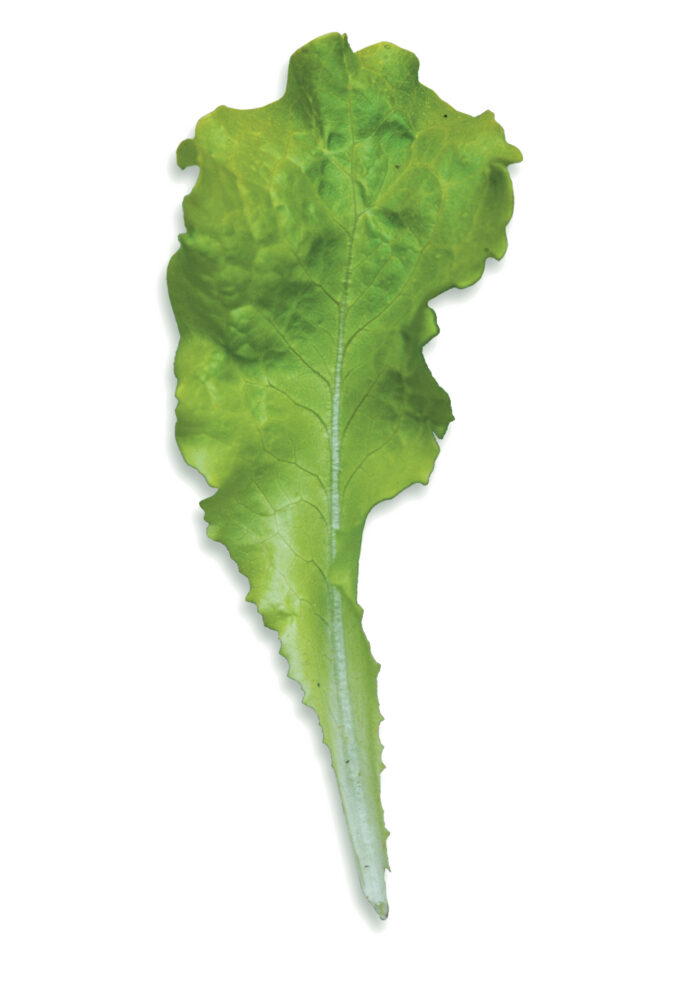 | 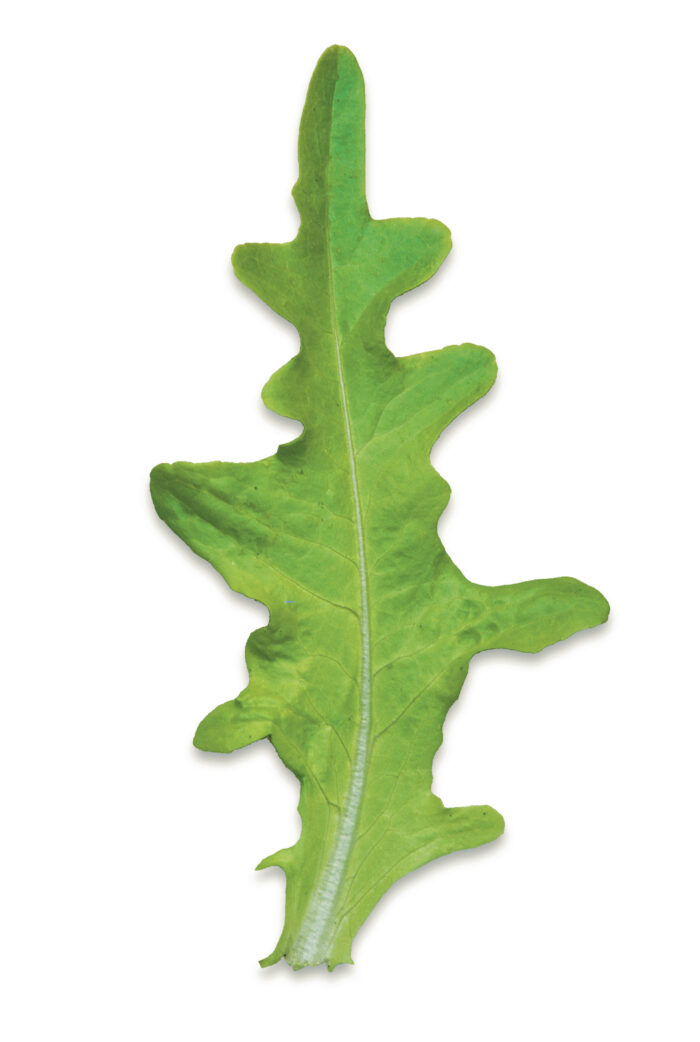 |
The cherry or green lobed leaves of the oakleaf types are pillars of the looseleaf establishment. At that place are at to the lowest degree half a dozen varieties of each color commonly establish in seed catalogs. 'Oakleaf' is the original old standby that yields well-baked, tender, light green leaves and keeps going through moderate heat. Although it has securely lobed leaves, 'Salad Bowl' is not a true oakleaf. Merely information technology is an All-America Selections winner that produces rosettes of delicate lime-green leaves and also has good heat tolerance.
Tops for reliability, even through a hot summer, is 'Ruddy Sails'. Some other All-America Selections winner, it'due south a fast grower with green and reddish-statuary leaves.
 |  |
A 1998 introduction that did well for me was 'Green Vision', which produces night-dark-green, glossy, savoyed leaves; it is a deadening bolter. 'Lollo Rossa' has light-greenish leaves with elegant rosy margins, while its cousin, 'Lollo Biondo', is pure stake dark-green. Both 'Lollo' cultivars are deeply curled, heat tolerant, and very decorative both in the garden and in salads.
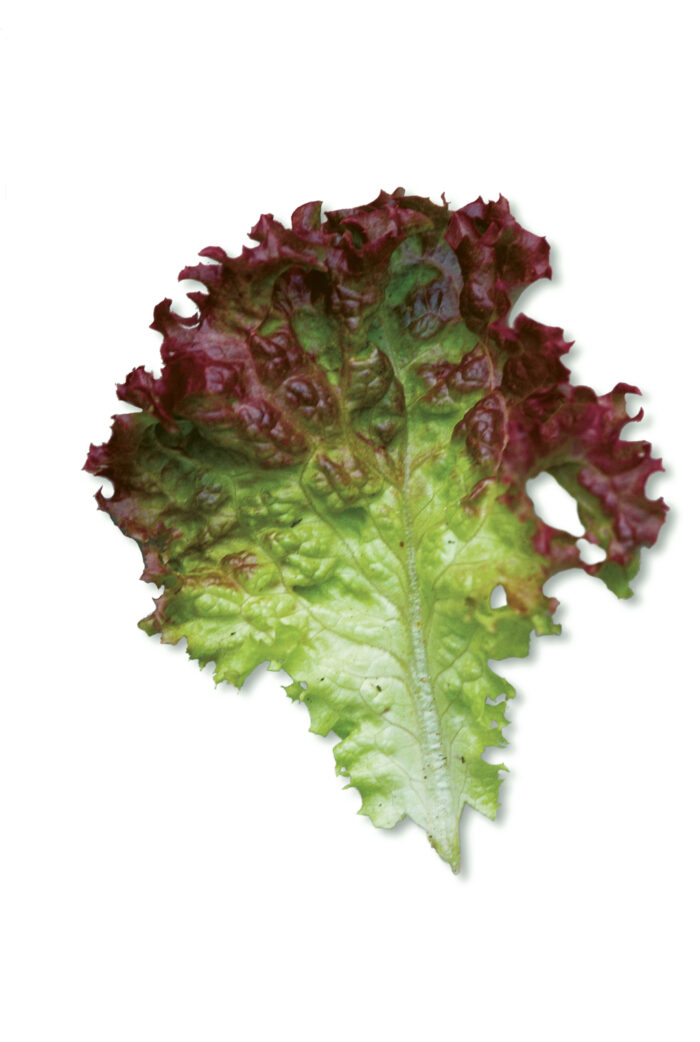 | 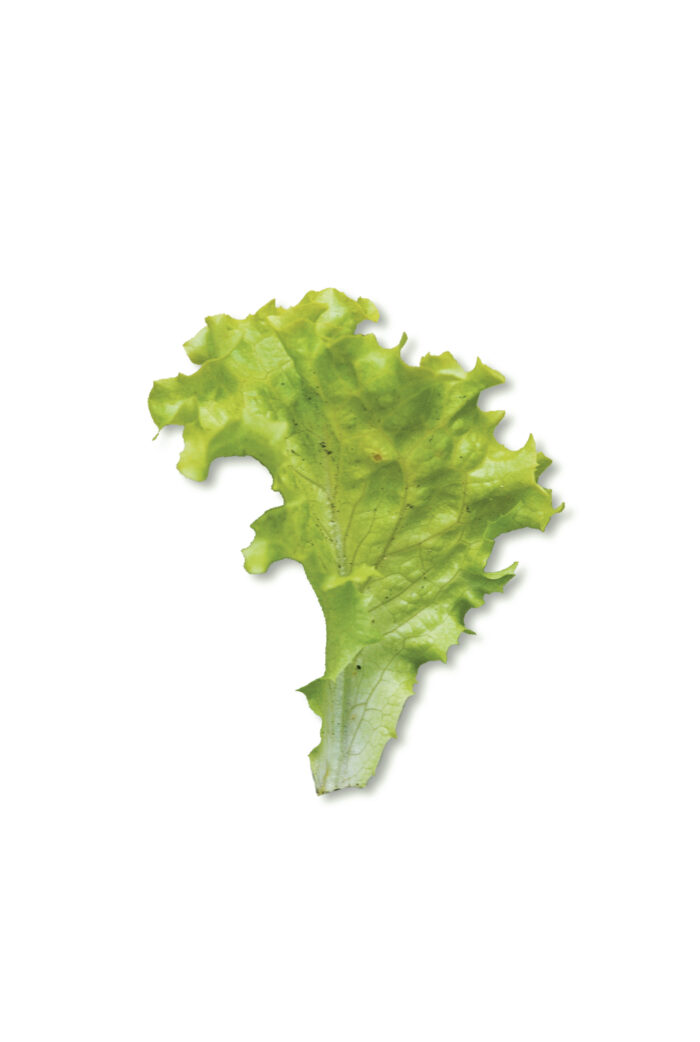 |
Stepping beyond the looseleaf varieties, there are some butterheads and romaine I similar to grow as cutting lettuces. They will also sprout new leaves, if less energetically than the looseleaf varieties.
Of the butterheads, 'Ermosa' has dark green leaves and stands up to a fair corporeality of summer heat. In a weak prespring moment, I ordered seed for romaine called 'Freckles' or 'Trout Back', simply because I liked its name. I wish all my weak moments worked out this well. Information technology is a beautiful lettuce—lime light-green flecked with wine-red markings—and has a fresh, delicate taste.
 |  |
Better ways to sow small seeds
Considering they are harvested while very young, cutting lettuces tin exist planted in adequately dense bands. Instead of broadcasting seed, it is but as easy to sow rows about 3 inches apart, with ½ inch to ane inch between plants in the row. I have institute that it takes less time to establish seed carefully than to thin seedlings; also, if not done properly, thinning often disturbs the roots of the seedlings that are left.
There are several ways to sow seed to eliminate thinning. The simplest is to mix the seed with dry out builder'south sand (not salty beach sand), using about twice as much sand as seed. This makes it easier to dribble seeds at adequately even spacing down a marked row. An cheap niggling gadget that distributes seed much better than a seed package is the Seed Sower, which has five different-size outlets to command the flow of seeds downwardly a tapered spout.
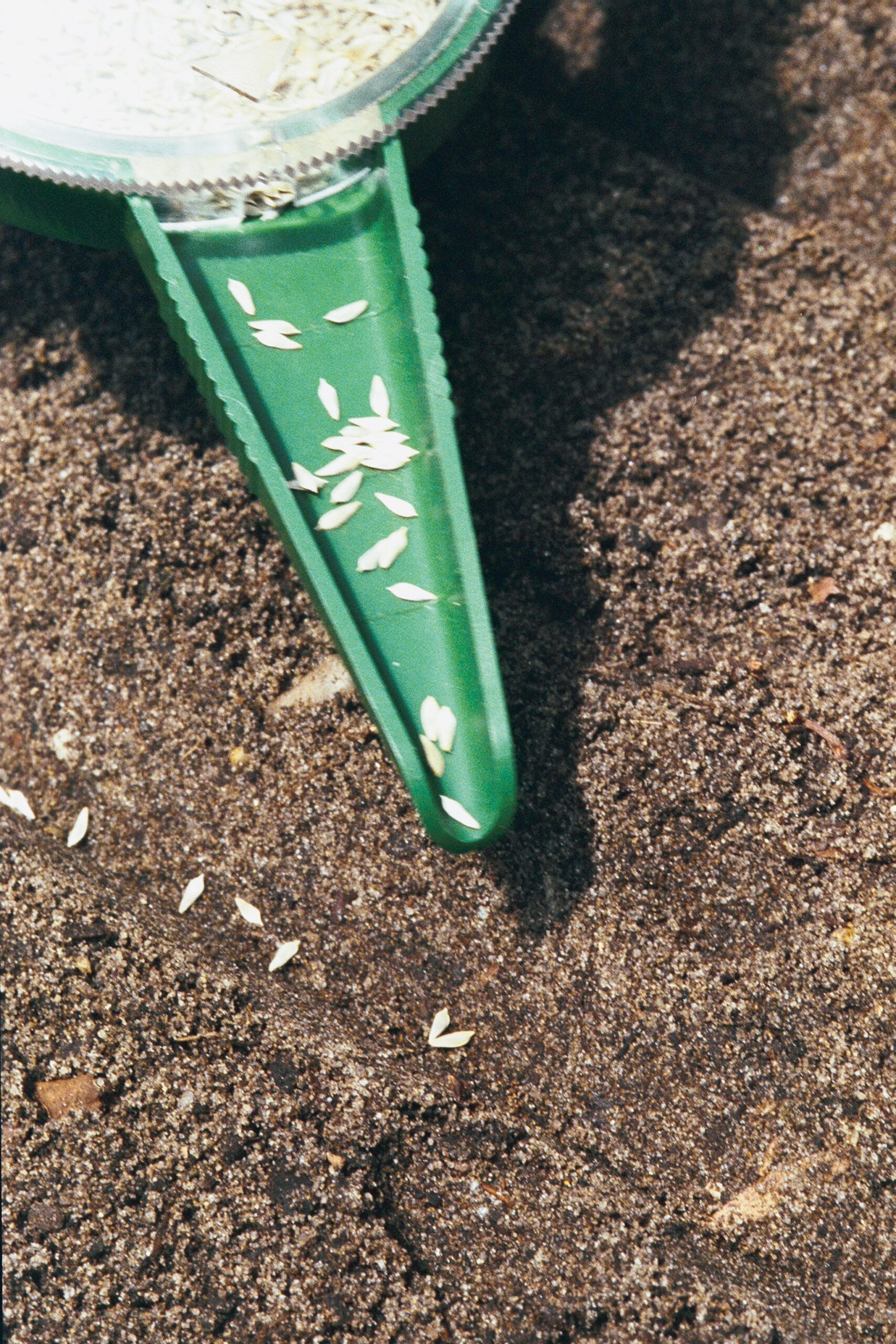 |  |
For garden rows, my old reliable is an Earthway Seeder, for which I at present take a dozen seed plates for different seed types and spacings. It makes a furrow, plants the seed at any depth I want, covers it, and firms the ground, all in one pass.
Final flavour I experimented with the Pinpoint Precision Seeder, which tin can handle half-dozen seed sizes. It's smaller and more maneuverable than the Earthway, and it works well with a finely tilled, droppings-free bed; still, information technology is a chip choosy in less-than-perfect atmospheric condition. A larger version sows four rows two¼ inches apart, perfect for mesclun.
If enough infinite is available, or but to confuse pests, I sometimes skip the cut-and-come up-again routine in favor of harvest, hoe, rake, and reseed. I harvest the young plants, roots and all, stir the soil upward with a stirrup hoe, rake the bed flat, and sow fresh seed.
Keep the soil rich
Lettuce likes a fairly rich, sandy loam. I till the beds and let them settle for a calendar week before applying about an inch of well-rotted manure or compost, which I work into the near-surface zone with the stirrup hoe. After harvesting leaves, I revive the plants with a weakfish or seaweed emulsion, or a manure tea. I have a siphon gadget on my drip-irrigation arrangement that allows me to feed emulsion or filtered manure tea down the lines. Most drip systems tin be fitted with something like.
Lettuce will grow, if non thrive, in less than platonic soil, but 1 matter information technology must have is water, about an inch per week. Drip irrigation puts water but where a establish needs it. Overhead watering wastes a lot of water, and at the wrong time—such as late in the day or in hot, muggy weather—information technology encourages fungal diseases.
Slugs love lettuce as much as I do, but luckily they seem to prefer beer. A few saucers of dried beer help them drown their sorrows and themselves. I tried sugar h2o once, which worked, but my bees liked it even more than the slugs did.
Cutworms can be a hassle, but usually they won't practice too much harm to a fairly dense ring of plants. Untilled soil tin can harbor cutworms, then I till my beds in spring while the weather is still common cold enough to kill overwintered cutworm pupae and eggs. If cutworms get a real problem, I add parasitic nematodes to the soil almost a week before planting.
How to abound lettuce
In the dwelling garden, sowing every week volition ensure a constant and generous supply of lettuce. Each sowing yields three or four cuttings before the plants are wearied. As a rough guide to quantity, sowing nigh three feet of row every week volition keep ane omnivorous adult well supplied with salad from spring to fall; a vegetarian might consume twice every bit much.
Lettuces adopt absurd temperatures, only by sowing every week, choosing heat-tolerant varieties, and using shade-cloth tunnels, I can produce lettuce right through my Zone 7 summers. It is easy to proceed the supply going right into winter by growing winter varieties in cold frames or tunnels of row-cover fabric. The same tunnels can exist used, covered instead with l pct shade fabric, to protect heat-sensitive lettuce from the summertime lord's day.
And only because information technology's hot doesn't mean I stop sowing lettuce. When temperatures hit the 80s, lettuce seeds will not germinate, and so I start seeds in flats in a absurd room indoors and set the plants in the garden when they have 2 sets of true leaves.
From early spring until the outset of winter, I cut lettuces and continue several salad bowls generously supplied. Simply lettuce is proficient for more than just salads. Attempt information technology in a creamy soup or wrapped around vinegared sushi rice for a tempting titbit.
Sources
Burpee
300 Park Ave.
Warminster, PA 18991
800-888-1447
www.burpee.com
The Cook's Garden
PO Box 535
Londonderry, VT 05148
800-457-9703
Hermosa Valley Garden Seeds
PO Box 1409
Santa Maria, CA 93456
877-834-7333
Johnny's Selected Seeds
955 Benton Avenue
Winslow, ME 04901
877-564-6697
www.johnnysseeds.com
Source: https://www.finegardening.com/project-guides/fruits-and-vegetables/cut-and-come-again-lettuce-sampler
0 Response to "Cut and Come Again Lettuce Voorburg"
Post a Comment